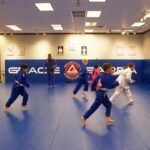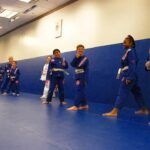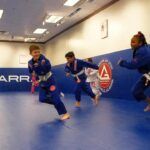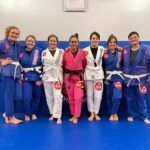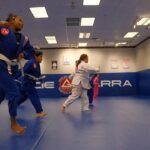
Some families find their thing in board games, weekend hikes, or cooking together. And then there are families who find it on the mat. Hi, I am Professor Jacque Dutra from Gracie Barra Trussville, and over the years I have watched something remarkable happen again and again: a child starts training, a parent gets curious, and before long, jiu-jitsu becomes the shared language of an entire family.
That is what this article is really about, the way jiu-jitsu quietly weaves itself into family life when more than one person in the house is training. It becomes a topic at dinner, a reason to high-five in the car, and sometimes the only conversation a parent and teenager actually want to have.
Why Shared Interests Matter More Than You Think
Most parents of teenagers will tell you the same thing: somewhere around age twelve or thirteen, the conversations get shorter. The bedroom door closes a little more. The “how was school?” gets a one-word answer. This is completely normal, but it does not make it easier.
What changes things is having something real in common, not something forced, but something both people genuinely care about. When a parent and a teenager both train jiu-jitsu, even in separate classes, even at different skill levels, they suddenly have an enormous amount to talk about. They compare how a technique felt. They laugh about the same struggles. They celebrate each other’s progress in a way that feels earned, not manufactured.
That kind of connection does not come from a family movie night. It comes from shared effort.
How It Usually Starts
Most of the time, it begins with a child. A parent brings their son or daughter to a free trial class, watches from the side, and notices something. The child is focused, engaged, and clearly enjoying the challenge. A few weeks later, that same parent is on the mat for a beginner class of their own.
Sometimes it works the other way. A parent starts training first at adults Jiu-Jitsu class, comes home talking about movement and technique, and the kids want to know what all the excitement is about. Either way, the result is the same: more than one person in the family is now part of the GB family, and the household starts to shift.
The Teenage Connection No One Talks About Enough
This is the part that surprises parents the most. Teenagers, who are famously difficult to reach, often open up faster around jiu-jitsu than almost anything else. Why? Because the mat is a great equalizer. A teenager who is blue belt does not have to pretend they do not know things to spare a parent’s feelings, they genuinely know more, and they get to show it.
That role reversal is powerful. When a parent asks their teenager to help them understand a guard pass or remember the steps of a sweep, the teen becomes the expert. That kind of moment builds respect that goes both ways, and it creates conversations that are not about grades, curfews, or screens.
Parents often tell me: “It’s the one thing we actually talk about.” That is worth paying attention to.
What Families Gain Beyond the Mat
When multiple family members train, the benefits are not just physical, they ripple into everyday life in ways that are hard to predict but easy to notice.
-
A shared vocabulary: Families who train together develop an inside language (technique names, mat moments, inside jokes) that belong only to them
-
Mutual respect for effort: Watching a parent struggle with something new teaches kids that growth takes work at every age; watching a child persist teaches parents the same
-
Better conversations about challenges: Jiu-jitsu involves failure, discomfort, and patience, and talking through those experiences together builds emotional honesty in the family
-
Accountability that feels natural: When everyone in the house trains, showing up to class becomes a shared norm, not a solo battle with motivation
-
A healthy outlet for the whole family: Stress from school, work, and daily life gets processed on the mat, which means less of it gets processed on each other
What This Looks Like at Gracie Barra Trussville
At GB Trussville, we have separate programs designed for different ages and experience levels, kids, teens, and adult classes each have their own space and rhythm. What connects them is the same curriculum, the same values, and the same community.
This means a parent and their child are developing skills on parallel tracks. They are not in the same class, but they are walking the same path. And when they get home, they have something genuine to share.
I have seen families where a dad joins because his twelve-year-old daughter would not stop talking about her classes. I have seen teenage boys who were pulling away from their parents find a new kind of respect for a father who was willing to get on the mat and be a beginner. I have seen moms connect with their teenagers over jiu-jitsu in ways that nothing else had managed to reach.
That is not an accident. It is what happens when a family builds something together, even when they are building it in different rooms.
Getting Started as a Family
Starting is simpler than most families expect. Each person signs up for the class that fits their age and experience, and the rest unfolds naturally. A few things to keep in mind:
-
Come with curiosity, not pressure: The goal is not for everyone to become a champion — it is for everyone to find something they enjoy and stick with
-
Talk about it at home: The conversations before and after class are just as valuable as the training itself
-
Be patient with different paces: One family member may progress faster than another, and that is completely normal — support matters more than speed
-
Show up for each other: Watching a family member compete, earn a stripe, or work through a tough class builds pride that goes both ways
Key Takeaways
-
Jiu-jitsu becomes a shared family language when more than one person trains, even in separate classes
-
It creates genuine common ground, especially with teenagers who are naturally pulling away
-
The role reversal — when a teen knows more than a parent — builds mutual respect and opens real conversations
-
Shared struggles on the mat translate into better communication, patience, and emotional honesty at home
-
Families who train together tend to stay consistent longer because accountability becomes natural
-
At GB Trussville, each family member trains in the right class for their level, while sharing the same community and values
FAQ — Families at Gracie Barra Trussville
Do parents and kids train in the same class?
No, each person trains in a class designed for their age and experience. Check here more about our Jiu-Jitsu classes. The connection comes from sharing the same journey, not the same room.
My teenager seems closed off. Could jiu-jitsu actually help?
Many parents find it does. When a teen becomes the one teaching a parent something, the dynamic shifts in a healthy way. Jiu-jitsu gives teenagers a space to grow their identity while staying connected to family.
What if I am a complete beginner and my child is already training?
That is actually a great starting point. Your child already has a head start, and you get to experience exactly what they went through. That shared experience builds understanding.
Do we have to start at the same time?
Not at all. Whether one person leads and the other follows, or you both start fresh, the important part is that you are both on the path.
How do I get started?
Book a FREE TRIAL NOW! and we will take care of everything else from there.