
“A safe martial arts program for kids uses qualified instructors, age-appropriate teaching, clear safety rules, and controlled drills. The best schools build confidence, body awareness, and respectful habits while keeping training structured, calm, and child-friendly.” – Prof. Jacque Dutra
Ever wonder what a safe martial arts program for kids should really look like, beyond the uniforms and the website photos? Hi, I am Professor Jacque Dutra from Gracie Barra Trussville, and what I have seen over the years is simple, the right Jiu Jitsu class can help a child grow in confidence, respect, and calm decision-making. The truth is, parents are not just looking for an activity, they are looking for a place where their child feels protected and valued.
When a family walks into Gracie Barra Trussville for the first time, I want them to feel at ease right away. We teach with care, we keep the environment structured, and we make safety part of every step on the mat. And honestly, that is what gives parents peace of mind, knowing their child is learning self-defense in a place built around integrity, brotherhood, and development.
What makes a kids martial arts program truly safe
A truly safe kids martial arts program starts with the right people and the right structure. At the academy, safety is not a side note, it is part of the lesson from the first bow to the last handshake. What if your child could learn confidence and self-control in a place that feels steady, calm, and welcoming? That is the kind of journey we want for our GB family.
Qualified instructors and age-appropriate instruction
Qualified instructors make the biggest difference in a child’s safety. They know how to teach in a way that fits a child’s age, attention span, and physical development.
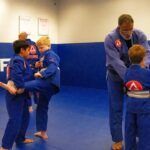
Here at our Jiu Jitsu school, a younger child may need simple games, short directions, and lots of encouragement. An older child may be ready for more detail, but still needs patient guidance. That is how learning stays safe, clear, and fun on the mat.
Controlled drills, clear boundaries, and respectful training
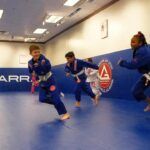
Controlled drills help children learn without chaos. The best classes use rules, spacing, and supervision so every child knows what to do and how to do it safely.
Clear boundaries and respectful training matter just as much. When kids understand when to stop, how to listen, and how to train with care, they build habits that follow them home, to school, and through everyday life. And that is one of the quiet strengths of the gentle art.
How Jiu Jitsu protects children while they learn
Jiu Jitsu protects children while they learn because it teaches control before power. On the mat, a child learns that skill matters more than size, and that lesson carries into daily life. What if your child could grow stronger without turning training into rough play? That is one of the quiet gifts of the gentle art.
Leverage over strength in kids BJJ
Leverage over strength is one of the safest ideas in kids BJJ. Children learn that good technique can work without forcing the body, which helps keep training calm and controlled.
That matters in real life too. A child who learns to solve problems with smart movement and patience is often better prepared for school, sports, and small daily challenges. Here at our academy, I see kids smile when they realize they do not need to be the biggest one in the room.
Confidence, body awareness, and calm decision-making
Confidence grows when children see they can try, improve, and succeed step by step. Jiu Jitsu also builds body awareness, so kids learn where they are in space and how to move safely with others.
That kind of training supports calm decision-making. When a child feels more in control, they are more likely to pause, listen, and choose wisely instead of reacting fast. And when you see that happen, you understand why the mat can become a laboratory for life.
Questions every parent should ask before enrolling
The best questions help parents see what really happens on the mat. A good academy should welcome those questions with patience and clarity. If you are checking out a school for your child, these three points can tell you a lot about safety, structure, and the way the GB family treats new students.
How are safety rules taught and enforced
Safety rules should be taught often, not just mentioned once. A strong school explains them in a simple way and reminds students during class so the habit becomes natural.
That is how children learn to listen, pause, and train with care. When rules are clear, kids feel more secure, and parents can feel more at ease. It is a small thing that makes a big difference on the mat and at home.
What happens in a beginner class
A good beginner class starts slowly and keeps things simple. Children should learn basic movements, safe falling, and respectful partner work before anything feels too hard.
What should you expect as a parent? You should expect guidance, patience, and a room where every child gets help at the right pace. I often tell families that the first class should feel like a welcome, not a test.
How instructors handle size and age differences
Skilled instructors pay close attention to size differences and age differences. They match children carefully and adjust drills so training stays safe and fair.
This matters because children grow at different speeds, and no one should feel pushed too far. When instructors supervise well, kids can learn with confidence and enjoy the journey at their own pace. And that is how trust grows on the mat.
Signs of a kid-friendly Jiu Jitsu school
When you walk into the right academy, you can feel it right away. The room feels calm, the students are respectful, and the coaches know how to guide children with care. That kind of place does not just teach Jiu Jitsu, it helps a child feel like they belong.
Positive culture and visible structure
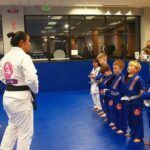
A kid-friendly school has a positive culture and visible structure. You can see it in the way students line up, listen, and treat each other with respect.
That structure helps children know what to expect. When the class has clear routines, kids feel more secure and parents feel more confident. At Gracie Barra, that steady rhythm is part of how we build trust on the mat.
Small wins, patience, and consistent encouragement
A good school gives children small wins that they can feel right away. It may be a better balance, a clean movement, or the courage to try again after a mistake.
Patience and consistent encouragement matter just as much. When a professor notices progress and says, “You are getting better,” a child starts to believe it too. And that simple moment can change how they carry themselves in class, at school, and at home.
Why families in Trussville trust Gracie Barra
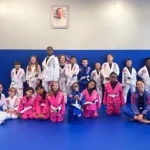
Families often want more than a class. They want a place where their child is seen, supported, and guided with care. That is why trust matters so much, and why our GB family works hard to make the academy feel like home from the very first visit.
The GB family approach to growth
The GB family approach is built around steady growth. Children are encouraged to improve step by step, without pressure to be perfect.
That kind of support helps kids stay motivated. A shy child may start with small gestures, then slowly begin to speak up, smile more, and carry themselves with more confidence. And that is the kind of progress we love to see at Gracie Barra Trussville.
Support for children from Trussville and nearby communities
We offer support for children from Trussville and the nearby communities with a warm and structured academy environment. Families appreciate knowing their children are learning in a place where respect and safety come first.
That support shows up in simple ways, like a friendly welcome at the door, patient coaching, and clear expectations on the mat. When a family finds that, they usually stay, because they know their child is part of something steady, positive, and real.
Key Takeaways
Here are the most important points parents should remember when choosing a safe martial arts program for kids:
- Start with qualified instructors: Safe classes begin with teachers who know how to guide children with patience, structure, and clear instruction. They match the lesson to the child’s age and skill level.
- Look for age-appropriate training: Kids need simple directions, short drills, and a pace that fits their development. The right class keeps learning fun without pushing children too hard.
- Check for clear safety rules: Strong programs teach rules often and enforce them every class. That helps children understand limits, listen better, and train with care.
- Choose controlled drills: Good schools use supervision, spacing, and calm practice to reduce rough play. Controlled training helps kids build skill without unnecessary risk.
- Value leverage over strength: Jiu Jitsu teaches children to use technique instead of force. That lowers rough contact and helps them move with more control and confidence.
- Ask about beginner classes: A beginner class should feel welcoming, simple, and organized. Children should learn basic movement, safe falling, and respectful partner work before anything more advanced.
- Notice the school culture: A kid-friendly academy shows respect, patience, and steady encouragement. Small wins matter because they help children feel capable and motivated.
- Trust the family atmosphere: Families in Trussville value schools that offer structure, care, and support for children from nearby communities. A welcoming environment helps parents feel confident from the first visit.
The best choice is a school that protects children while helping them grow in confidence, discipline, and calm decision-making.
FAQ – Safe Martial Arts Program for Kids
What should I look for in a safe martial arts program for kids?
Look for qualified instructors, age-appropriate teaching, clear safety rules, and a class that feels calm, structured, and respectful for children.
How does Jiu Jitsu help keep kids safe while they learn?
Jiu Jitsu teaches children to use technique, control, and leverage instead of strength, which helps reduce rough force and supports safe training habits.
What questions should parents ask before enrolling their child?
Ask how safety rules are taught, what a beginner class looks like, and how instructors handle size and age differences between students.
How can I tell if a Jiu Jitsu school is kid-friendly?
A kid-friendly school has a positive culture, visible structure, patient coaching, and consistent encouragement that helps children feel welcomed and supported.
Why do families in Trussville trust Gracie Barra?
Families trust Gracie Barra because the academy focuses on growth, care, and structure, while offering a supportive environment for children from Trussville and nearby communities.